🌏 Singapore · Thailand · Bangladesh · United Kingdom 📞 +65 9810 4326  |  ✉ info@shipdyn.com
🏆 Novel Hull Form · Registered Trademarked

Y-Hull®
The Future of Ship Hull Design

A transformative patented hull form delivering 25% reduced fuel consumption — integrating the structural advantages of a monohull with the stability of a catamaran. Five years of independent research. One patent. Two operational vessels.

Enquire About Y-Hull® → Technical Overview ↓
Trademarked Invention Y-Hull® · Registered trademarled IPO UK · Inventor: Amitavo C Wye FRINA · IMO Net-Zero Aligned
0%
Fuel Efficiency Gain vs Monohull
13.5m
Research Vessel Length
17.3t
Displacement (Test Condition)
0%
Efficiency at Cruising Speed
0%
Fuel Reduction
0
Years Research
0
Operational Vessels
2019
Patent Filed

Revolutionary Invention

What is the Y-Hull®?

Y-Hull® is a hybrid hull form that intelligently combines the best characteristics of two established hull types — creating something entirely new and patented.
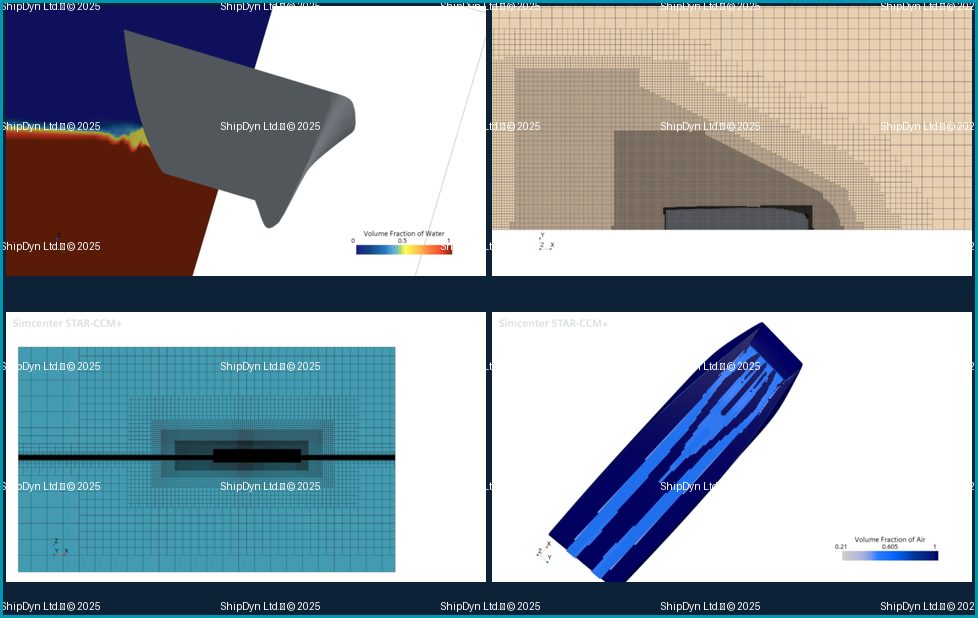
Y-Hull® CFD Simulation — ShipDyn Ltd.® Proprietary Research

Y-Hull® CFD Simulations · Proprietary Research · ShipDyn Ltd.®

🌊
Reduced Wave Resistance

Y-Hull® substantially reduces bow-induced waves, lowering hydrodynamic resistance as the ship moves forward through water.

25% Fuel Efficiency

Technical analysis, along with practically proven data from operational vessels, demonstrates significantly less resistance compared to traditional monohulls and catamarans — directly translating to a 25% reduction in fuel consumption compared to a similar monohull.

💨
Auto Air Lubrication

The unique Y-Hull® shape automatically allows air to flow underneath the hull from bow to stern. This natural air layer between the hull and water surface reduces frictional resistance — a passive, maintenance-free efficiency gain with no additional systems required.

🔀
Hybrid Hull Form

Integrates the structural and economic advantages of a monohull with the stability and speed of a catamaran in a more efficient way — addressing a long-standing compromise in naval architecture.

🌍
IMO Net-Zero Aligned

Y-Hull® directly addresses GHG challenges in maritime engineering, supporting IMO targets for net-zero emissions from international shipping.

🔬
Peer-Reviewed Research

Supported by a peer-reviewed RINA 2019 conference paper and backed by five years of independent research (2014–2019) by the sole inventor and patent holder.
The Journey

From Research to Reality

The Y-Hull® represents five years of dedicated independent research, progressing from concept through rigorous CFD testing to a granted patent and two operational vessels.

2014-2015

Phase 1: Conceptual Hypothesis

Independent research initiated by Amitavo C Wye — identifying inefficiencies in existing hull forms and conceptualising the Y-Hull® solution.

2015–2016

Phase 2: Computational Modelling & Geometry Definition

Extensive preliminary design work undertaken to define the Y-Hull® geometry. Multiple hull form variants explored and evaluated analytically.

2016-2017

Phase 3: Hydrodynamic Analysis & Resistance Assessment

Hydrodynamic analysis of the Y-hull® was done using software packages. Wave resistance prediction using Michell integral and Savitsky methods applied to the novel geometry.

2017-2018

Phase 4: Practical Design Development & Design Validation

Full naval architecture design package was prepared suitable for vessel construction. Development of lines plans, general arrangements, structural design, and construction drawings for the first Y-hull® passenger vessel.

2018

Phase 5: Full-Scale Construction

MV Jamuna the world's first Y-Hull® commercial passenger vessel is built and deployed on an operational inland waterway route. Sea trials and performance monitoring commence, providing the first real-world validation of the CFD predictions. Operational fuel consumption data collected and compared against the conventional monohull MV Padma operating on the same route.

2019

Phase 6: Full-scale sea-trial validation

Sea trials and performance monitoring commence, providing the first real-world validation of the CFD predictions. Operational fuel consumption data collected and compared against the conventional monohull MV Padma with same specification operating on the same route.

2019

Phase 7: Filing of Patent & Peer-Reviewed Publication

Singapore IPOS Patent filed. Peer-reviewed paper presented at RINA 2019 International Conference.

2019-2020

Phase 8: Operational Validation & Second Vessel

A second Y-Hull® vessel is designed and built, further validating the design across different vessel configurations. Commercial interest from regional shipowners grows significantly.

2020-2023

Phase 9: Continuous performance monitoring of two Y-hull® vessels

Both Y-Hull® vessels' performance was monitored and tracked, with detailed fuel consumption report. Further validation of the design across different vessel configurations was studied.

2024–Present

Partnership with EcoNavis Solutions Ltd., Glasgow, UK

A partnership is formed to commercialise the Y-Hull® in EU and UK.

Key Credentials

Inventor's Portfolio

The inventor Amitavo C Wye, FRINA is a chartered naval architect with significant international recognition.

Credentials

  • FRINA — Fellow, Royal Institution of Naval Architects
  • PhD (Honouris Causa), The Thames International University, France
  • NFWF USA Research Grant (Project Lead)
  • Scottish Enterprise Smart Grant (Project Manager)
  • Innovate UK ICURe Exploit Award
  • COO, EcoNavis Solutions Ltd., UK; a University of Strathclyde spin out.
  • RINA 2019 Conference — Peer-Reviewed Paper
  • A portfolio of designing more than 350 ships worldwide

Hull Form

The Y-Hull® Geometry

The defining feature of the Y-Hull® is its unique cross-sectional profile — twin forward demi-hulls that gradually merge into a single stern hull with single-shaft propulsion. This geometry creates the natural air channel that gives Y-Hull® its exceptional efficiency advantage.

Designed, analysed and validated across a comprehensive CFD simulation programme using Simcenter STAR-CCM+, covering multiple Froude numbers and displacement conditions.

19–27%
vs Monohull (CFD)
1.8–8.2%
vs Catamaran (CFD)
33%
Operational Gain at Cruise Speed of 7knots
2
Deployed Vessels
Enquire About Y-Hull® → Visit y-hull.com
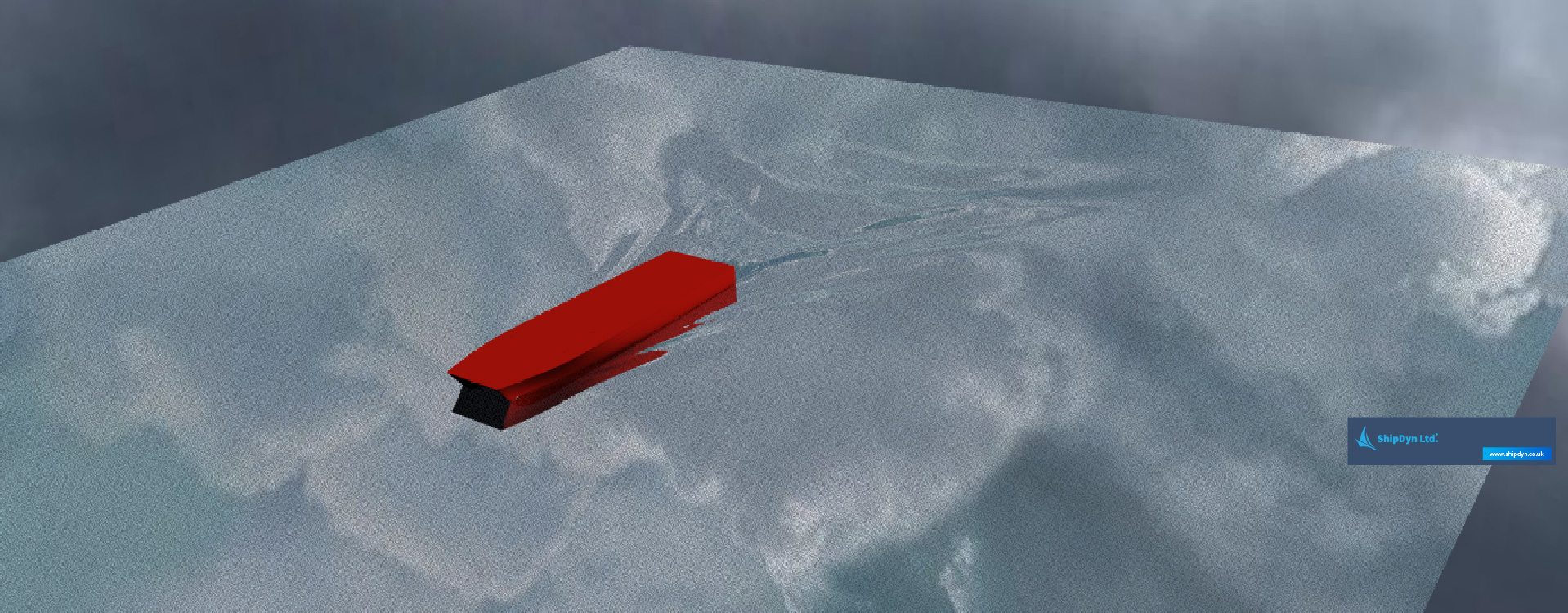
Y-Hull® 3D Design

Y-Hull® 3D Design Render — ShipDyn Ltd.® Proprietary

Explore Further

Key Areas

📊

Technical Brief

Full CFD results, design overview, and operational performance data from deployed Y-Hull® vessels.

View on y-hull.com →

Route to Excellence

From concept in 2014 through patent grant in 2019 to commercial deployment — the full Y-Hull® journey.

View Timeline →
🤝

Licensing Opportunities

Explore Y-Hull® licensing for new build or retrofit. Commercial terms for qualified shipowners and shipyards.

Explore Licensing →

Licence Y-Hull®

Interested in Y-Hull® for Your Vessel?

Contact us to discuss Y-Hull® retrofit, new build licensing, or research collaboration.

Contact ShipDyn→